
Hair loss can be frustrating, especially when the hair gradually becomes thinner and the scalp becomes more visible. Genetics, hormones, age, stress, illness, nutritional problems and several other factors can affect the normal hair-growth cycle.
While medicines and procedures such as PRP, GFC and other hair restoration treatments are available, modern dermatology also offers light-based approaches for selected patients.
One such option is low-level laser therapy, commonly called LLLT. It uses low-intensity red or near-infrared light to target the scalp and may support hair growth in people with certain types of hair loss.
If you are considering LLLT for Hair Loss, it is important to understand that it is not a universal solution for every type of hair loss. A dermatologist should first identify the cause of your hair thinning and determine whether light-based therapy is appropriate.
At Anudhi Clinic, hair and scalp concerns are evaluated individually so that treatment can be selected according to the patient’s condition.
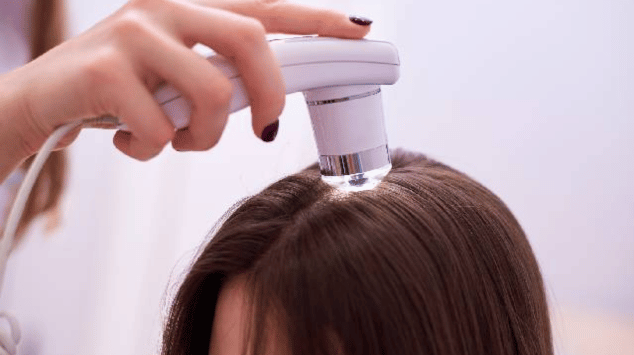
What Is LLLT for Hair Loss?
LLLT stands for Low-Level Laser Therapy. It is also called low-level light therapy or photobiomodulation.
The treatment uses low-intensity light directed toward the scalp. Unlike surgical lasers that are designed to cut or remove tissue, LLLT uses much lower levels of energy.
The goal is to stimulate biological activity around hair follicles and support the hair-growth process.
Research has found the strongest evidence for LLLT in hereditary or pattern hair loss, although research into other forms of alopecia is still developing.
How Does Low-Level Laser Therapy Work?
The basic idea is that specific wavelengths of light interact with cells in the scalp and may influence cellular activity.
For hair follicles, this may help support:
● Hair follicle activity
● The growth phase of the hair cycle
● Hair density
● Hair shaft thickness
● Scalp health
However, LLLT does not create new hair follicles where follicles have been permanently destroyed.
This is why diagnosis is important before starting treatment.
Who May Benefit From LLLT?
LLLT is mainly studied for hereditary or pattern hair loss.
This includes:
- Male Pattern Hair Loss
- Female Pattern Hair Loss
- Telogen effluvium
The treatment may be considered for selected patients with early or moderate pattern hair loss.
What Causes Hair Loss?
Hair loss can happen for many reasons.
Common causes include:
● Genetics
● Hormonal changes
● Stress
● Nutritional deficiencies
● Certain medications
● Scalp disorders
● Autoimmune conditions
● Tight hairstyles
● Major illness
For example, sudden round bald patches may suggest alopecia areata rather than typical pattern hair loss.
Similarly, excessive shedding after illness or major stress may be telogen effluvium.
Because the treatment differs for each condition, identifying the cause should come before selecting a procedure.
Benefits of LLLT
When used for appropriate patients, LLLT may offer several advantages.
- Non-Surgical
- No Incisions
- Generally Comfortable
- May Support Hair Density
- May Improve Hair Thickness
What Happens During an LLLT Session?
The exact procedure depends on the device and treatment protocol.
A typical clinical approach may include:
Step 1: Hair and Scalp Assessment
The dermatologist examines the scalp and identifies the pattern and severity of hair loss.
Step 2: Treatment Planning
The treatment area and appropriate light-based protocol are selected.
Step 3: Light Application
The device is positioned over the scalp so that the low-level light reaches the treatment area.
Step 4: Monitoring
Your progress can be reviewed over multiple sessions to determine whether the treatment is helping.
The treatment is generally non-invasive and does not require a surgical recovery period.
How Many Sessions Are Required?
LLLT is not usually a one-time treatment.
Hair grows slowly, so consistent treatment over time is generally required.
The exact schedule depends on:
● Device used
● Treatment protocol
● Type of hair loss
● Severity
● Individual response
Your dermatologist will recommend the appropriate frequency.
It is important not to expect visible hair growth after just one or two sessions.
When Can You See Results?
Hair growth takes time.
If LLLT works for an individual patient, improvements may gradually appear over several months.
Possible changes may include:
● Reduced appearance of thinning
● Improved hair density
● Thicker-looking hair
● Better coverage of the scalp
Results vary significantly between individuals.
Some people may respond better than others, and treatment cannot guarantee complete hair restoration.
How Can Anudhi Clinic Help?
At Anudhi Clinic, we understand that hair loss is not the same for everyone.
Before recommending a treatment, our dermatology team can assess:
● Hair-loss pattern
● Hair density
● Scalp condition
● Family history
● Duration of hair loss
● Lifestyle factors
● Previous treatments
● Possible underlying causes
Based on the assessment, the treatment plan may include appropriate medical management or procedures such as PRP, GFC, LLLT or other suitable options.
The goal is to select treatment according to the actual cause rather than simply choosing the latest hair-growth procedure.
Frequently Asked Questions
1. What is LLLT?
LLLT stands for Low-Level Laser Therapy. It uses low-intensity light to stimulate biological activity in the scalp and may support hair growth in selected patients.
2. Does LLLT actually grow hair?
Research suggests that LLLT can improve hair density in some people with pattern hair loss, but results vary and it cannot restore a full head of hair in every patient.
3. Is LLLT painful?
LLLT is generally considered comfortable and does not involve injections or incisions.
4. How long does LLLT take to work?
Hair growth is gradual. If the treatment works, visible changes generally require consistent treatment over several months.
5. Can women use LLLT?
Yes. LLLT has been studied in both men and women with pattern hair loss.
6. Can LLLT be combined with PRP/GFC?
Depending on the diagnosis, a dermatologist may consider combining different approaches. The treatment plan should be individualized.
8. Is LLLT better than PRP/GFC?
There is no single best treatment for everyone. LLLT and PRP/GFC work differently, and the appropriate choice depends on the patient’s condition.
9. Does LLLT permanently cure hair loss?
LLLT should not be described as a permanent cure. Pattern hair loss is a chronic condition and often requires ongoing management.
10. Where can I get professional LLLT for hair loss?
Anudhi Clinic can evaluate your hair-loss pattern and determine whether LLLT or another treatment is appropriate for your condition.
Conclusion
Low-level laser therapy is a non-invasive approach that may help support hair growth in selected people, particularly those experiencing hereditary or pattern hair loss.
If you are considering LLLT for Hair Loss, the most important first step is identifying the actual cause of your hair thinning. At Anudhi Clinic, dermatologists can evaluate your scalp and hair condition and recommend an individualized treatment plan.
LLLT may be useful as part of a broader hair-care strategy, but realistic expectations and consistent treatment are important for achieving the best possible outcome.